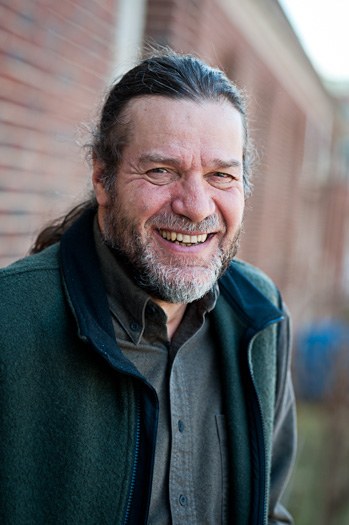
Picture of Jim Hamlett


James M. Hamlett

202 Agricultural Engineering
University Park, PA 16802
(814)865-2651
FAX: (815)863-1031
hyc@psu.edu


Degrees

B.S. Agricultural Engineering, Iowa State University 1973

M.S. Agricultural Engineering, Iowa State University 1982

Ph.D. Agricultural Engineering/Soil Physics, Iowa State University 1987

Registered Professional Engineer, Iowa License # 08682


Links

Vita


Areas Of Interest
*Soil and water conservation engineering
*Soil physics
*Runoff and sediment transport processes
*Watershed hydrology
*GIS resource applications


"To know what you prefer instead of saying Amen to what the world tells you you ought to prefer is to have kept your soul alive." Robert Louis Stevenson


I spend my time trying to keep my soul alive - living and learning and experiencing the myriad treasures that the world brings forth. The most bountiful of those treasures are found with Nature, with the agricultural and natural resources that make our Earth productive and, for the most part, suitable for our species to thrive. My entire life has centered on agriculture and to the pursuit of activities related to the outdoors. While I find that I must spend what seems to be an inordinate amount of time at a desk, I do seek "escapes" back to my roots and to the calm and peace of Nature"s places.


Simulation Modeling for Agricultural Nonpoint Pollution Control:
This research area focuses on the use of simulation models linked with geographic information systems (GIS) to better understand and assess nonpoint pollution potential from agricultural watersheds. Efforts are directed at using various hydrologic and nonpoint pollution models to identify critical areas that contribute to runoff and nonpoint pollution. This research is used to better design agricultural systems that can be used to help minimize water quality impacts due to agricultural practices. Many agricultural simulation models are being used and tested for their applicability to Pennsylvania conditions. Uncertainty and variability in input parameters are evaluated as to the effects on model simulated output and hence on the potential use of the model(s). Activities are also directed at developing decision support systems and user interfaces to enhance data input preparation for the various simulation models and model output representation. Where necessary, GIS linked models are developed or modified to allow relative comparisons of the pollution potential of various watersheds in Pennsylvania. Projects have been conducted in cooperation with faculty colleagues including Rick Day at the Land Analysis Lab, Gary Petersen and Barry Evans in The Office for Remote Sensing of Earth Resources (ORSER) at the Penn State Institute of the Environment(PSIE), Don Epp, in Agricultural Economics, and Greg Knight in the Dept. of Geography. Funding sources for these studies have included: the USDA, EPA, NSF, USGS, PA DEP, and the Agricultural Experiment Station.


Effect of Conservation Practices on Pollutant Transport:
Conduct comparative assessments of the effects of agricultural management practices and systems on nonpoint pollutant transport. Undertake model, lab, and field investigations of the transport of water, soil particles, and nutrient/chemical constituents through the soil profile. Investigate effects of agricultural practices on surface and subsurface water quality and identify best management practices to minimize pollution potential while maintaining agricultural production. Assess the traditional practices used in conservation and water quality projects to determine their suitability and the effectiveness of past and existing programs. Modeling activities include the use of several agricultural nonpoint pollution models (such as CREAMS, GLEAMS, AGNPS, SWRRBWQ, SWAT, and WEPP).


Soil and Water Conservation Engineering:
To improve water quality, maintain viable agricultural production, and protect the resource base, runoff and erosion from both agricultural and non-agricultural lands must be controlled. The soil and water conservation engineering research of Jim Hamlett and Al Jarrett, in the Department of Agricultural and Biological Engineering, focuses on enhancing our understanding of the effects of various natural and man-induced conditions on runoff, erosion, and soil-related properties. By better understanding these processes and properties, we can better identify and design improved engineering practices and systems. One of the studies focuses on investigating the effects of various tillage systems and earth disturbance activities, in time and/or space, on soil physical properties, runoff, erosion and pollutant movement. Another emphasis is being directed toward better quantifying and understanding the partial area hydrology contributions in a small watershed in Pennsylvania. These efforts have lead to the design, development and installation of new subsurface water elevation sensors and surface runoff sensors. Use of these sensors on a small watershed in Pennsylvania will assist us in better describing the phenomenon of partial area runoff. We are also investigating the use of time domain reflectometry (TDR) with greenhouse-growing media (high organic matter and low bulk density) with the intent of developing a better system integrating the use of these sensors for automatic irrigation and nutrient applications in greenhouses. Efforts are also underway to improve basic models/approaches that are widely used to predict surface runoff in pre- and post-urbanization conditions. Collaborators in these activities include W.J. Gburek, USDA Pasture System and Watershed Management Research Lab; Dan Fritton, Soil Science; and E. J. Holcomb, Horticulture Dept.


Teaching Activities

Present Courses Taught:
Transport Processes for Biological Production, B E 402. Engineering applications of the fundamentals of fluid mechanics, heat transfer, sedimentation, diffusion, and lighting to biological production in bioreactors, indoor environments, and outdoor environments. Penn State University.

Research Methods, ABE 500. Introduction to research philosophies, methodologies, issues and policies; measures of research quality; research report writing; research ethics. Penn State University.

Surface Transport of Agricultural Pollutants, ABE 517. Understanding and modeling the surface transport processes of agricultural pollutants; particularly erosion, sediment transport, and movement of sediment-attached constituents. Penn State University.


Fulbright Experience in Bulgaria

In 1998 - 1999 I had the great opportunity to take a sabbatical and spend 10 months in Bulgaria as a Fulbright Senior Scholar and Visiting Professor. My time was spent in Sofia teaching at the University of Architecture, Civil Engineering, and Geodesy (in the Department of Irrigation and Drainage Engineering) and conducting research at the Institute of Water Problems, Bulgarian Academy of Sciences. This 10-month sojourn in a post-communist country was filled with new experiences, challenges, rewards and insights. The most-lasting effects of my stay and travels there will undoubtedly be: the dear friends and colleagues from Bulgaria whom I came to know; my American Fulbright friends who shared time, travel, and experiences during our "in-country" period; and the natural and man-made places that have left indelible imprints on my mind. The memories and insights gained will provide me a perspective on life that could not have been gained by life in the states. I am a lucky soul.


Publications

Jarrett, A.R., H.B. Manbeck, J.M. Hamlett, J.C. Denardo, D.J. Beattie, and R.D. Berghage. 2004, Green Roofs: A Stormwater LID. NABEC Paper #04-0015. Presented at NABEC 2004, Northeast Agricultural and Biological Engineering Conference, University Park, PA.

Confesor, R. B. Jr. and J.M. Hamlett. 2003. Spring Creek Watershed Water Quality Analysis. Study and report funded by Trout Unlimited, Inc. (Spring Creek, PA, Chapter) and prepared in cooperation with the Clearwater Conservancy and Spring Creek Watershed Community’s Water Resources within and from small agricultural watersheds. Transactions of the ASAE, 27:1355-1363, 1369.

Ghebremichael, L.T., G. Zhang, J.M. Hamlett, and B. Evans. 2003. Improved AVGWLF Model for Sediment/Pesticide Prediction from Agricultural Watersheds. In 2003 Spring Specialty Conference Proceedings, Agricultural Hydrology and Water Quality,” J.D. Williams and D.W. Kolpin, editors. May 12-14, 2003. Kansas City, Missouri. American Water Resources Association. (peer-reviewed)

Khandelwal, N., H. Lin, J.M. Hamlett, and R. L. Day. 2003. Uncertainty and sensitivity analyses of Visual PRZM-3 using Monte Carlo simulation technique. ASAE Microfiche No. 03-2108. ASAE, St. Joseph, MI.

Srivastava, P., J.M. Hamlett, P.D. Robillard. 2003. Watershed Optimization of Agricultural Best Management Practices: Continuous Simulation Versus Design Storms. Journal of AWRA, 39(5):1043-1054.

Zhang, G., and J.M. Hamlett. 2003. Modifying the sediment yield prediction of the Generalized Watershed Loading Functions (GWLF) model. ASAE Microfiche No. 03-2064. ASAE, St. Joseph, MI.

Evans, B.M., D.W. Lehning, K.J. Corradini, G.W. Petersen, E. Nizeyimana, J.M. Hamlett, P.D. Robillard, and R.L. Day. 2002. A comprehensive GIS-based modeling approach for predicting nutrient loads in watersheds. Journal of Spatial Hydrology, 2(2):1-18 (on-line at www.spatialhydrology.com.).